

Germany
Google Pixel Frauen-Bundesliga2026/2027 — Standings, Fixtures & Top Scorers
Table
| # | Team | Pts |
|---|---|---|
| 1 |
 Bayern Munich Bayern Munich
|
18 |
| 2 |
 Wolfsburg Wolfsburg
|
15 |
| 3 |
 Eintracht Frankfurt Eintracht Frankfurt
|
13 |
| 4 |
 Bayer Leverkusen Bayer Leverkusen
|
12 |
| 5 |
 Werder Bremen Werder Bremen
|
10 |
| 6 |
 Freiburg Freiburg
|
10 |
| 7 |
 Köln Köln
|
9 |
| 8 |
 Stuttgart Stuttgart
|
8 |
| 9 |
 RB Leipzig RB Leipzig
|
7 |
| 10 |
 Union Berlin Union Berlin
|
6 |
| 11 |
 Hoffenheim Hoffenheim
|
6 |
| 12 |
 Hamburger SV Hamburger SV
|
5 |
| 13 |
 Nürnberg Nürnberg
|
2 |
| 14 |
 Mainz 05 Mainz 05
|
0 |
Recent Results
All results → Nürnberg
Stuttgart
Wolfsburg
Eintracht Frankfurt
Köln
RB Leipzig
Upcoming
Full schedule → Freiburg
Köln
Bayer Leverkusen
Union Berlin
Werder Bremen
Mainz 05
About Google Pixel Frauen-Bundesliga
The Google Pixel Frauen-Bundesliga is the premier women's football league in Germany and one of the most storied competitions in women's football history. Founded in 1990, the Frauen-Bundesliga was among the first fully professional women's top-flight leagues established in Europe, predating most of its continental rivals and setting a standard for the game's development on the continent. Today, it stands as a powerhouse competition that regularly shapes the UEFA Women's Champions League — and the careers of Germany's most celebrated international stars.
The women's Bundesliga runs on a September-to-May calendar across 14 teams, expanded from 12 at the start of the 2025/26 season to allow greater competition and more pathways for emerging clubs. Each team plays a double round-robin format, producing a full and absorbing campaign that stretches across the German winter. The Frauen-Bundesliga table — known in German as the frauen bundesliga tabelle — is followed closely by millions of supporters, with title races and relegation battles keeping every matchday tightly contested. The frauen bundesliga ergebnisse, or results page, consistently ranks among the most searched football content in Germany.
Two clubs have come to define modern German women's football. VfL Wolfsburg, backed by the Volkswagen Group, have assembled one of the most consistent squads in European women's football, winning eleven Frauen-Bundesliga titles and reaching multiple UEFA Women's Champions League finals. FC Bayern Munich, the other dominant force, have won multiple recent championships and invested heavily in their women's programme — with wolfsburg women and bayern munich women matches now attracting record crowds and mainstream television audiences. The rivalry between these two clubs gives the league much of its narrative backbone, though Eintracht Frankfurt (historically FFC Frankfurt) and several ambitious newcomers continue to push them hard.
The Frauen-Bundesliga has been sponsored by Google Pixel since 2023, a landmark deal that raised the league's commercial profile and brought significant investment into the promotion of the competition. German women's football has never been more visible — broadcast on MagentaSport, DAZN, and the free-to-air public broadcaster ARD, the league reaches millions of viewers each season. The frauen bundesliga spielplan (fixture list) draws anticipation from fans across Germany and from international followers of the women's game, while the frauen bundesliga torschützenliste (top scorers list) is tracked closely throughout the season. For anyone following women's football in Europe, the Google Pixel Frauen-Bundesliga is essential viewing.
Frauen-Bundesliga Teams 2025/26
The 2025/26 Google Pixel Frauen-Bundesliga features 14 teams — two more than the historic 12-team format — following the league's expansion ahead of the 2025/26 season. The expansion was designed to broaden competition, create more matchdays, and give additional German clubs a pathway to the top flight.
The 14 teams competing in the Frauen-Bundesliga 2025/26 season are: FC Bayern Munich W, VfL Wolfsburg W, Eintracht Frankfurt W, TSG Hoffenheim W, Bayer Leverkusen W, Werder Bremen W, SC Freiburg W, 1. FC Köln W, 1. FC Union Berlin W, RB Leipzig W, 1. FC Nürnberg W, Hamburger SV W, SGS Essen W, and Carl Zeiss Jena W.
FC Bayern Munich women and VfL Wolfsburg women are the clear title favourites heading into the season, as they have been for much of the last decade. However, Eintracht Frankfurt — who inherited the legacy and infrastructure of the legendary FFC Frankfurt — are perennial contenders for European qualification. TSG Hoffenheim women have established themselves as consistent top-half finishers, while Bayer Leverkusen and Werder Bremen represent ambitious mid-table clubs with growing supporter bases. The arrival of Nürnberg, HSV, and Carl Zeiss Jena adds depth and regional diversity to the competition.
Frauen-Bundesliga Championship History
The Frauen-Bundesliga has been contested since the 1990/91 season, making it one of the oldest women's top-flight competitions in Europe. Over more than three decades, the title has been dominated by a handful of elite clubs — but the story of who holds the most championships is more complicated, and more dramatic, than a simple table of winners suggests.
FFC Frankfurt — later absorbed into Eintracht Frankfurt — were the most successful club in Frauen-Bundesliga history for much of the league's existence, winning nine Frauen-Bundesliga titles between 1998/99 and 2013/14 and establishing Germany as a women's football superpower during the same era that the German national team dominated the FIFA Women's World Cup and UEFA Women's Championship. Turbine Potsdam were another dominant force, winning six titles, including a remarkable run in the mid-2000s when they were among the best women's club sides in Europe.
The balance of power shifted decisively in the 2010s as VfL Wolfsburg women, bankrolled by Volkswagen, assembled a squad capable of competing with the very best in Europe. Wolfsburg have won eleven Frauen-Bundesliga titles and, crucially, back-to-back UEFA Women's Champions League trophies in 2013 and 2014. FC Bayern Munich, not to be outdone, invested aggressively in their women's programme and have claimed multiple recent championships, making the Bayern-Wolfsburg rivalry the defining competition of the modern frauen-bundesliga era.
Frauen-Bundesliga Players and Salaries
The Frauen-Bundesliga is home to some of the finest women's footballers in Europe, with Germany's national team players forming the backbone of the league's most competitive squads. Alexandra Popp, who is leaving VfL Wolfsburg for Borussia Dortmund at the end of the 2025/26 season, is arguably the most recognisable face of women's football in Germany — a forward of extraordinary power and technical quality who has been one of the Frauen-Bundesliga's defining players for over a decade. Lea Schüller, who joined Manchester United Women from Bayern Munich in December 2025, is among the most prolific strikers in German women's football, consistently challenging for the frauen bundesliga torschützenliste (top scorers chart) each season. Giulia Gwinn, also of Bayern Munich, combines attacking energy with defensive discipline and has become one of the most marketable players in European women's football.
On the financial side, the Frauen-Bundesliga remains a step below the very wealthiest clubs in England, Spain, and France, but salaries have risen sharply with the league's growing commercial profile. Estimates suggest that top players at FC Bayern Munich women and VfL Wolfsburg women earn between €100,000 and €250,000 per year, with most established Frauen-Bundesliga professionals earning somewhere between €30,000 and €80,000 annually. The Google Pixel sponsorship and expanded broadcast deals have accelerated wage growth across the league, and the gap between the Frauen-Bundesliga and the Women's Super League is narrowing. International players — including several from the U.S., Brazil, and Scandinavia — have been drawn to the league by both its competitive level and its improving financial packages.
How to Watch Frauen-Bundesliga
Fans in Germany have more options to watch the Frauen-Bundesliga than at any point in the league's history. The primary broadcaster is MagentaSport, Deutsche Telekom's streaming platform, which holds rights to extensive live coverage throughout the season. DAZN also carries a selection of matches each matchday, accessible via subscription for viewers across Germany and internationally.
Critically for the sport's growth, ARD — Germany's flagship public broadcaster — screens selected Frauen-Bundesliga fixtures on free-to-air television, ensuring that major matches, particularly those involving FC Bayern Munich women and VfL Wolfsburg women, reach the widest possible audience without a paywall. This combination of a subscription-led primary broadcaster and free-to-air access for marquee games mirrors the model used successfully by the men's Bundesliga and reflects the DFB's strategic commitment to growing women's football viewership in Germany.
For international audiences, the frauen bundesliga spielplan and live scores are available across major football apps and women's football websites, with growing global interest in the league driven by Champions League performances from Wolfsburg and Bayern. Highlights and clips are distributed across YouTube and the league's official social media channels, making women's Bundesliga content accessible worldwide.
Frauen-Bundesliga Stadiums and Attendance
One of the most positive trends in German women's football in recent seasons has been the steady growth in match attendance. While the Frauen-Bundesliga historically played in small purpose-built arenas or training grounds, the league's biggest clubs have increasingly used their main stadium infrastructure to host high-profile women's matches — with striking results.
FC Bayern Munich women have played select home games at Allianz Arena and the Audi Sportpark, with attendances for major fixtures breaking the 10,000 barrier in recent seasons and surging toward 20,000+ for marquee matchdays. VfL Wolfsburg women play their home matches at the AOK-Stadion (capacity approximately 5,000 for women's games) as well as the Volkswagen Arena for bigger occasions, with the club developing a dedicated fanbase that travels in significant numbers across Germany. Eintracht Frankfurt women, benefiting from the brand recognition and infrastructure of one of Germany's biggest clubs, have seen strong attendances at Deutsche Bank Park for high-profile fixtures.
Average attendance across the Frauen-Bundesliga has grown year-on-year, buoyed by the Google Pixel sponsorship and increased media exposure. The league's goal is to drive average matchday crowds above 5,000 across all 14 teams — a benchmark that the top clubs already exceed comfortably and which mid-table sides are approaching through community engagement, lower ticket prices, and co-marketing with their men's counterparts.
Key Facts
- Founded in 1990, the Frauen-Bundesliga first competed in the 1990/91 season — making it one of the oldest professional women's football leagues in Europe
- 14 teams compete in the 2025/26 season following an expansion from 12 clubs from 2025/26
- VfL Wolfsburg women have won eleven Frauen-Bundesliga titles, including back-to-back UEFA Women's Champions League trophies in 2013 and 2014
- FFC Frankfurt (now merged into Eintracht Frankfurt) won nine Frauen-Bundesliga titles between 1998/99 and 2013/14
- The league runs September to May, following the same winter calendar as the men's Bundesliga
- Title sponsor Google Pixel joined in 2023, significantly raising the commercial profile of German women's football
- Matches are broadcast on MagentaSport, DAZN, and free-to-air ARD in Germany
- Alexandra Popp, who plays for VfL Wolfsburg and has agreed to join Borussia Dortmund from summer 2026, is one of the most decorated players in Frauen-Bundesliga and German national team history
- Top player salaries at Bayern Munich women and Wolfsburg women are estimated at €100,000–€250,000 per year
- The Frauen-Bundesliga top two clubs automatically qualify for the UEFA Women's Champions League each season
- Turbine Potsdam, historically one of Germany's most successful women's clubs, won six Frauen-Bundesliga titles
- Average match attendances have grown consistently since 2022, driven by increased broadcast exposure and club investment in women's football
Frequently Asked Questions
What is the Frauen-Bundesliga?
The Frauen-Bundesliga (officially the Google Pixel Frauen-Bundesliga since 2023) is the top-tier women's football league in Germany. Founded in 1990, it is one of the oldest women's professional leagues in Europe and consistently produces UEFA Women's Champions League contenders, most notably FC Bayern Munich women and VfL Wolfsburg women.
How many teams are in the Frauen-Bundesliga?
The Frauen-Bundesliga has 14 teams in the 2025/26 season, following an expansion from 12 clubs implemented at the start of the 2025/26 season. The 14 clubs are: Bayern Munich W, Wolfsburg W, Eintracht Frankfurt W, Hoffenheim W, Bayer Leverkusen W, Werder Bremen W, Freiburg W, Köln W, Union Berlin W, RB Leipzig W, Nürnberg W, Hamburger SV W, SGS Essen W, and Carl Zeiss Jena W.
Who has won the most Frauen-Bundesliga titles?
FFC Frankfurt (now Eintracht Frankfurt) and VfL Wolfsburg are the two most decorated clubs, though Wolfsburg lead with eleven Frauen-Bundesliga championships. FFC Frankfurt dominated from the mid-1990s to late 2000s, while Wolfsburg became the league's defining club of the 2010s. Turbine Potsdam have won six titles and FC Bayern Munich have claimed multiple recent championships.
Where can I watch the Frauen-Bundesliga?
In Germany, Frauen-Bundesliga matches are broadcast on MagentaSport (Deutsche Telekom's streaming platform), DAZN, and on free-to-air ARD for selected fixtures. Internationally, highlights and live scores are available through major football apps and the league's official digital channels. DAZN is available in multiple European countries.
When does the Frauen-Bundesliga season run?
The Frauen-Bundesliga season runs from September to May, following a winter calendar. The season typically begins in early September with the first matchday and concludes in late April or May. There is a winter break in December and January, mirroring the men's Bundesliga schedule.
Which is the best team in the Frauen-Bundesliga?
FC Bayern Munich women and VfL Wolfsburg women are the two dominant forces in the modern Frauen-Bundesliga. Wolfsburg have won eleven titles and are consistently among the top clubs in the UEFA Women's Champions League. Bayern Munich have invested heavily in their women's programme and have claimed multiple recent Frauen-Bundesliga championships. The Bayern-Wolfsburg rivalry defines the contemporary women's Bundesliga.
Who are the top players in the Frauen-Bundesliga?
The most prominent players in the Frauen-Bundesliga include Alexandra Popp (VfL Wolfsburg — joining Borussia Dortmund summer 2026), Germany's captain and one of the most decorated strikers in German women's football history; Lea Schüller (Manchester United Women), a prolific forward and regular frauen bundesliga torschützenliste contender; and Giulia Gwinn (FC Bayern Munich), an attacking defender who is one of the most recognisable faces in European women's football.
Does the Frauen-Bundesliga qualify teams for the UEFA Women's Champions League?
Yes. The top two teams in the Frauen-Bundesliga table at the end of each season automatically qualify for the UEFA Women's Champions League. Germany consistently provides some of the strongest entrants in the competition — VfL Wolfsburg women won the UEFA Women's Champions League in 2013 and 2014, and Bayern Munich have reached multiple semi-finals and finals.
What is the frauen bundesliga tabelle?
The frauen bundesliga tabelle is the German term for the Frauen-Bundesliga standings table. It ranks all 14 clubs by points accumulated throughout the season, with wins worth three points and draws worth one. The team at the top of the frauen bundesliga tabelle at the end of the season is crowned German women's champion.
How much do Frauen-Bundesliga players earn?
Player salaries in the Frauen-Bundesliga vary widely by club and experience. Top players at FC Bayern Munich women and VfL Wolfsburg women are estimated to earn between €100,000 and €250,000 per year. Most established Frauen-Bundesliga professionals earn between €30,000 and €80,000 annually, with salaries rising steadily following the Google Pixel sponsorship and expanded broadcast deals.
The current Frauen-Bundesliga table (frauen bundesliga tabelle) for the 2025/26 season. The standings show all 14 clubs ranked by points, with wins, draws, losses, goals scored, and goal difference. The top two in the Frauen-Bundesliga standings qualify automatically for the UEFA Women's Champions League. Follow the title race between FC Bayern Munich women and VfL Wolfsburg women — and the relegation battle at the foot of the table — as the season unfolds.
| # | Team | P | Pts |
|---|---|---|---|
| 1 |
Bayern Munich
|
6 | 18 |
| 2 |
Wolfsburg
|
6 | 15 |
| 3 |
Eintracht Frankfurt
|
6 | 13 |
| 4 |
Bayer Leverkusen
|
6 | 12 |
| 5 |
Werder Bremen
|
6 | 10 |
| 6 |
Freiburg
|
6 | 10 |
| 7 |
Köln
|
6 | 9 |
| 8 |
Stuttgart
|
6 | 8 |
| 9 |
RB Leipzig
|
6 | 7 |
| 10 |
Union Berlin
|
6 | 6 |
| 11 |
Hoffenheim
|
6 | 6 |
| 12 |
Hamburger SV
|
6 | 5 |
| 13 |
Nürnberg
|
6 | 2 |
| 14 |
Mainz 05
|
6 | 0 |
The latest frauen bundesliga ergebnisse — results and scores — from the 2025/26 season. Browse completed matches, final scores, and goalscorers from every matchday. FC Bayern Munich women and VfL Wolfsburg women are the headline clubs to follow, but with 14 teams and weekly action across Germany, there is always something to catch up on.
The complete Frauen-Bundesliga fixtures and spielplan for the 2025/26 season. Browse all upcoming matches across the 14 clubs, including kick-off times and match pairings. The Frauen-Bundesliga season runs September to May with a winter break. Games are broadcast on MagentaSport, DAZN, and ARD. Check back each matchday for the latest frauen bundesliga spielplan updates.
Freiburg
Köln
Bayer Leverkusen
Union Berlin
Werder Bremen
Mainz 05
Bayern Munich
Wolfsburg
 Eintracht Frankfurt
 Wolfsburg
 Bayer Leverkusen
 Bayern Munich
 Wolfsburg
 Stuttgart
 Hamburger SV
Werder Bremen
Hamburger SV
Werder Bremen
 Stuttgart
 Bayern Munich
Bayer Leverkusen
Bayern Munich
Bayer Leverkusen
 RB Leipzig
Hamburger SV
Nürnberg
RB Leipzig
Hamburger SV
Nürnberg
 Hoffenheim
Bayern Munich
Nürnberg
Hoffenheim
Bayern Munich
Nürnberg
 Wolfsburg
 Hoffenheim
 Eintracht Frankfurt
Bayern Munich
Werder Bremen
Eintracht Frankfurt
Bayern Munich
Werder Bremen
 Hoffenheim
Wolfsburg
Hoffenheim
Wolfsburg
 Union Berlin
Hoffenheim
Stuttgart
Freiburg
Stuttgart
Wolfsburg
Bayer Leverkusen
Köln
Wolfsburg
Wolfsburg
Bayern Munich
Union Berlin
Hoffenheim
Stuttgart
Freiburg
Stuttgart
Wolfsburg
Bayer Leverkusen
Köln
Wolfsburg
Wolfsburg
Bayern Munich
 Bayern Munich
Bayer Leverkusen
RB Leipzig
RB Leipzig
Hamburger SV
RB Leipzig
Bayern Munich
Bayer Leverkusen
RB Leipzig
RB Leipzig
Hamburger SV
RB Leipzig
 Bayer Leverkusen
 RB Leipzig
Nürnberg
RB Leipzig
Nürnberg
 Eintracht Frankfurt
Köln
Eintracht Frankfurt
Köln
 Köln
Köln
 Köln
Eintracht Frankfurt
Nürnberg
Köln
Eintracht Frankfurt
Nürnberg
 Wolfsburg
 Hoffenheim
RB Leipzig
Hoffenheim
RB Leipzig
 Bayer Leverkusen
Freiburg
Bayer Leverkusen
Freiburg
 Werder Bremen
Union Berlin
Werder Bremen
Union Berlin
 Freiburg
Union Berlin
Nürnberg
RB Leipzig
Bayer Leverkusen
Nürnberg
Hoffenheim
Freiburg
Union Berlin
Nürnberg
RB Leipzig
Bayer Leverkusen
Nürnberg
Hoffenheim

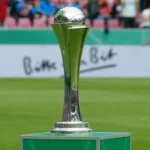



Winners
| Season | Champion |
|---|---|
| 2024/2025 |
 Bayern Munich W Bayern Munich W
|
| 2023/2024 |
Bayern Munich W
|