 Primera Division Women
 Not long ago, the development of women’s football was a story told almost exclusively through success: growing popularity, record breaking attendances, new broadcasting deals and historic tournaments. Today, however, a note of unease is increasingly breaking into that narrative. The FIFPRO report on the excessive match load of elite women footballers comes as a cold shower, a reminder that the dynamic growth of the game is not always matched by equally responsible management of its foundations.
The problem is not new, but in women’s football it is taking on a particularly dangerous form. Top players, who are the backbone of both clubs and national teams, now operate within a calendar that resembles less a sporting plan and more a logistical puzzle with no room for recovery. Domestic leagues, national cups, the Champions League, international call ups, global tournaments all overlap, compressing breaks to the bare minimum. Rest, which should be an integral part of the training process, is becoming a luxury.
The FIFPRO report does not rely on emotion, but on data. And that data is unequivocal: the number of minutes played is increasing, recovery time is shrinking, and the risk of injury, especially overload injuries and anterior cruciate ligament ruptures, is already higher in women’s football than in the men’s game. This is not a coincidence, nor a side effect of professionalisation. It is a systemic problem that, in the long term, could slow the development of the entire discipline.
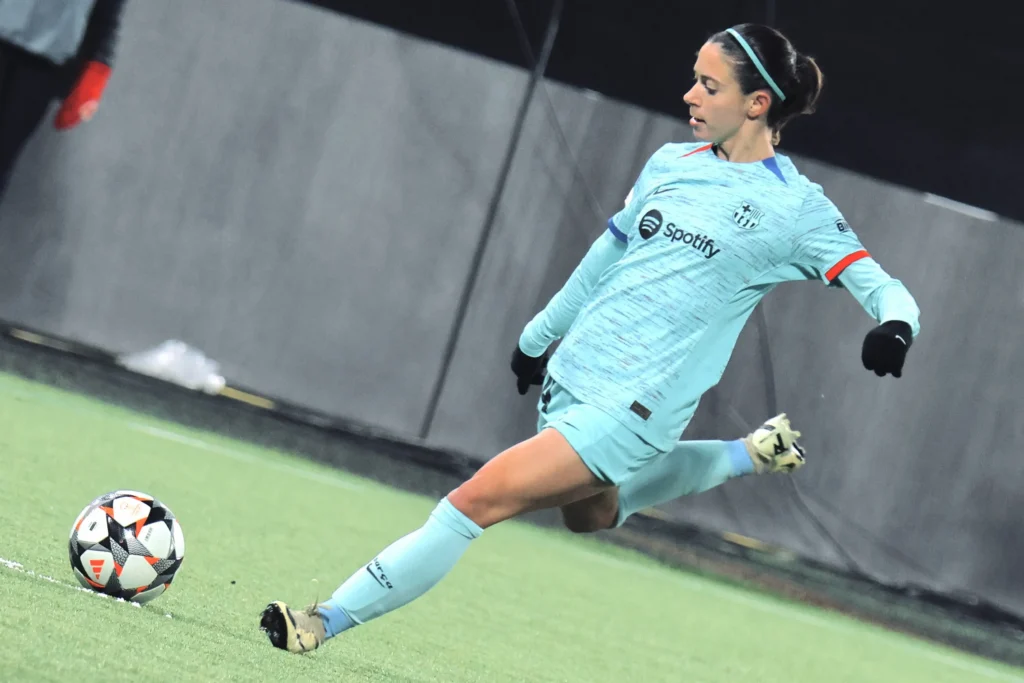
The symbol of this situation could hardly be more telling. Aitana Bonmatí, one of the biggest stars in world football, played close to 60 matches last season for FC Barcelona and the Spanish national team. The intensity, the pace, the travel and the lack of genuine recovery periods ended dramatically, with a serious leg fracture that ruled her out for many months. This was not an unlucky incident detached from context. It was the moment when the body finally said “enough.”
And such stories are becoming more frequent. Torn ACLs, overload injuries, muscular problems that a decade ago were considered incidental are now almost a permanent feature of the women’s football landscape. When national team leaders are forced out of tournaments in their opening days, and clubs lose their biggest names for half a season, it is difficult to speak of coincidence. This is the result of a calendar that refuses to acknowledge the limits of human biology.
The paradox is that players are now paying the price for the success they worked years to achieve. They are finally visible, finally playing in major stadiums, finally producing matches with real commercial value. But visibility has brought pressure: more competitions, more tournaments, more products to sell. Market logic, transferred almost directly from the men’s game, fails to account for the realities of women’s football: shorter league histories, smaller squads, different physiological conditions, and still limited medical and training infrastructures in many clubs.
Most troubling is the fact that in this race, the voices of the players themselves are barely heard. And when they are, they are often treated as an obstacle to further product development. Meanwhile, FIFPRO’s warnings should be seen as an alarm bell, not a bargaining chip. Players’ health is not a renewable resource at the pace dictated by the calendar. An injury is not a statistic, it is months of rehabilitation, lost seasons, and sometimes prematurely ended careers.
A columnist is entitled to ask a sharp question, because responsibility lies with the system. Are FIFA, federations and clubs, in their pursuit of growth and profit, quietly destroying their own stars? If elite women footballers are burned out by the age of 25 to 27, the bill will sooner or later be presented by the pitch itself. A drop in quality, more injuries to star players, declining fan interest, no marketing campaign will save that scenario.
The development of women’s football does not have to mean repeating all the mistakes of the men’s game. The FIFPRO report offers a rare opportunity: to pause and ask whether the pace of growth has begun to outrun common sense. Because truly sustainable development is not about more matches in the calendar, but about longer, healthier and more valuable careers for those who create the sport.