
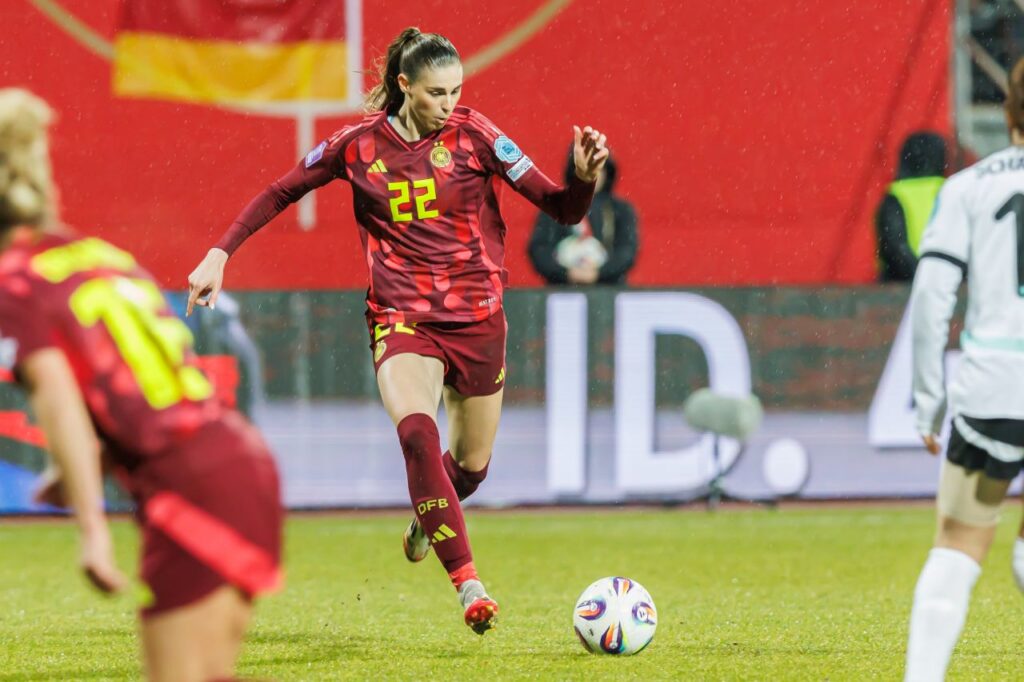
The 2025 UEFA Women’s Nations League Finals represent the culmination of the second edition of the UEFA Nations League in its women’s format. This event is increasingly attracting the attention of fans, experts, and sponsors, becoming a symbol of the growing importance of women’s football in Europe. The aim of the competition is to raise the level of rivalry between national teams and to provide top-tier sides with more matches of real importance between the European Championship and World Cup qualifying cycles.
Four national teams that won their groups in the top division, League A, will take part in the finals. It is they who, through a knockout system, compete for the title of the best team on the continent in this edition. According to the rules, the semi-finals, the third-place match, and the final are played in a two-legged format, with each pair playing two matches, home and away. Advancement is determined by the aggregate score of both matches, and in the event of a tie, extra time and, if necessary, a penalty shootout are played. It is worth noting that the away goals rule does not apply, which affects teams’ strategies, as they increasingly focus on controlling the outcome across both games rather than simply scoring away goals.
The finals schedule has been spread over several months, maintaining tension and media interest. The semi-finals are scheduled for the period from October 24 to October 28, 2025, while the final and third-place match will take place between November 28 and December 2, 2025. The draw for the fixtures took place on June 6, 2025. This structure of the schedule is advantageous from a television and marketing perspective, although it may create logistical challenges for federations and clubs, considering the congestion of league and international fixtures during that time.
Semi-final pairs
UEFA has confirmed that in the semi-finals of the 2025 UEFA Women’s Nations League Finals, four European powerhouses will meet:
Germany vs France
• First leg: October 24, 2025 – Düsseldorf (Merkur Spiel-Arena)
• Second leg: October 28, 2025 – Caen (Stade Michel d’Ornano)
Spain vs Sweden
• First leg: October 24, 2025 – Málaga (La Rosaleda)
• Second leg: October 28, 2025 – Gothenburg (Gamla Ullevi)
The final and the third-place match will be played between November 28 and December 2, 2025. The host nations for the final matches will be the countries that advance from their respective semi-final pairings.
Among the participants are four giants of European women’s football: Germany, France, Spain, and Sweden. These are teams with an extraordinarily rich history of success, outstanding players, and enormous marketing potential. Germany, seven-time European champions, confirmed their dominance in Group A1. France, a consistent global powerhouse, triumphed in Group A2. Spain, the reigning world champion, was unmatched in Group A3, while Sweden, known for its discipline and tactical solidity, took first place in Group A4. This quartet guarantees the tournament the highest possible sporting and media level.
The final tournament is played in a two-legged system in both the semi-finals and the final, which adds a unique sense of drama to the competition. The lack of the away goals rule increases unpredictability and excitement, as matches are more likely to go into extra time and penalty shootouts. For fans, this means more tension; for teams, it demands greater mental resilience and precise tactical planning.
From a sporting perspective, the Women’s Nations League Finals mark an important step in the continued professionalization of women’s football. Thanks to the new format, UEFA provides elite teams with the opportunity to compete at the highest level during periods when previously there were no prestigious international tournaments. This not only raises the quality of play but also increases the exposure of players, who more frequently appear in matches of major importance. For coaches, it is also an ideal opportunity to test younger players, assess squad depth, and build team cohesion in conditions similar to major tournaments.
On the other hand, the dense match calendar remains a challenge. Competition in October, November, and December increases the risk of player fatigue and injuries, as many of them play regularly in demanding domestic leagues. Additional challenges may include difficult weather conditions in Europe during this period, particularly in northern countries. UEFA will need to carefully monitor logistics, scheduling, and recovery time between matches to prevent physical strain and injuries among players.
The media and promotional aspects are also highly significant. The UEFA Women’s Nations League Finals are not only a sporting competition but also a tool for building the brand of women’s football in Europe. With a format spread over several months and the participation of the most recognizable national teams, UEFA gains the opportunity to run a long-term promotional campaign that engages fans and sponsors. Viewers can follow the progress of the competition for months, creating a narrative similar to that known from men’s tournaments.
The abolition of the away goals rule, although controversial, may prove beneficial for entertainment value. Teams will be more inclined to play attacking football, knowing that every goal counts equally regardless of where it is scored. This, in turn, could increase the tournament’s attractiveness for fans and broadcasters.
In summary, the 2025 UEFA Women’s Nations League Finals are an ambitious UEFA initiative that has the potential to become one of the most important events in the women’s football calendar. The tournament combines the highest sporting level with growing media and marketing prestige. The rivalry between Germany, France, Spain, and Sweden promises a spectacle of the highest quality, and the new format, featuring two-legged finals with potential extra time and penalties, guarantees excitement until the very end. If UEFA maintains organizational consistency and provides proper logistical support, this tournament could permanently establish itself in the landscape of European women’s football as an event comparable in prestige to continental championship finals.