 NWSL
NWSL The NWSL between a golden era and a pivotal moment of development
Women’s soccer in the United States is entering a new phase. The 2024–2025 seasons delivered an unprecedented surge in viewership, growing interest from broadcasters, and an increasingly strong presence of the league in mainstream sports media. At the same time, this media success has highlighted the challenges the NWSL must confront if it wants to maintain its status as one of the strongest leagues in the world.
A historic final and breaking the one-million-viewer barrier
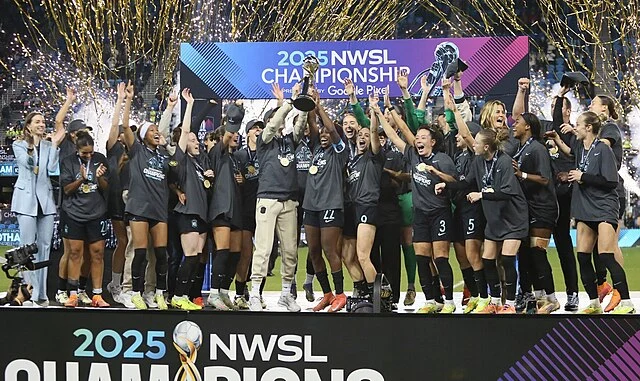
The symbol of this breakthrough was the 2024 season final, which attracted more than 1.18 million viewers on U.S. television. It was the first time in history that a women’s league soccer match in the United States surpassed the one-million-viewer mark. This result not only set a new NWSL record, but also confirmed that the league has moved beyond being a niche media product.
Importantly, the high viewership was not a one-off phenomenon. Earlier, playoff matches and the most high-profile regular-season games had already recorded clear year-over-year increases, while average viewership grew steadily as the season progressed.
ESPN drives the league – hard numbers confirm the trend
Broadcasts on ESPN played a key role in this transformation. According to official data from the ESPN Press Room and analyses by Nielsen Big Data+, average viewership of NWSL matches on ESPN platforms in the 2025 season reached 228,000 viewers, compared with 141,000 the year before. This represents an increase of approximately 61% year over year.
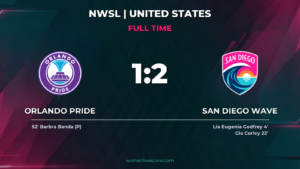
The figures for selected matches were even more impressive. In some broadcasts, viewership rose by as much as 68% compared to the previous year. One example was the Orlando Pride vs. San Diego Wave match, which averaged 357,000 viewers and peaked at as many as 683,000. Just a few years ago, results like these were unattainable for the NWSL.
For broadcasters and advertisers, this is a clear signal that the league is generating not only growing reach but also a stable and engaged audience, particularly in the key 18–34 and 18–49 age groups. Women’s soccer is no longer a “programming experiment”, it is becoming a fully fledged part of the sports broadcast lineup.
Media success versus global competition
However, with growing popularity comes the question of the league’s sporting future. Europe, especially England, Spain, and France is investing ever more aggressively in women’s soccer, offering top players higher contracts and the opportunity to compete in the UEFA Women’s Champions League. In this context, the rigid salary cap in the NWSL is increasingly seen as a risk factor.
While the salary-cap system guaranteed stability and competitive balance for years, today it makes it harder to retain the biggest stars at a time when the global market is offering them far more attractive financial conditions.
Pressure for systemic change: the league responds
In response to these challenges, league officials, clubs, and the players’ union have entered intensive negotiations over regulatory changes. One of the key solutions is the High Impact Player Rule, a mechanism that allows clubs to partially exclude the contract of one key player from the salary cap.
The goal of this reform is to create conditions that allow clubs to offer star players compensation closer to European standards without completely abandoning cost controls. As analysts cited by All For XI emphasize, this is a clear signal that the league recognizes the risk of a talent drain and is attempting to counter it at an early stage.
These changes also matter for the league’s image. They show that the NWSL wants to be a league of first choice, not merely a stopover before a transfer to Europe.
A moment of truth for the NWSL
The upcoming decisions on salary regulations may prove to be a turning point in the league’s history. If record-breaking viewership growth is supported by further investment in players, the NWSL has a real chance to retain its stars and attract the best footballers from around the world.
If, however, media success does not translate into financial competitiveness, pressure from Europe will continue to mount. Today’s debate about systemic reforms is therefore not a sign of crisis, but rather evidence of a mature league that understands that true sporting strength must go hand in hand with a modern business model.