
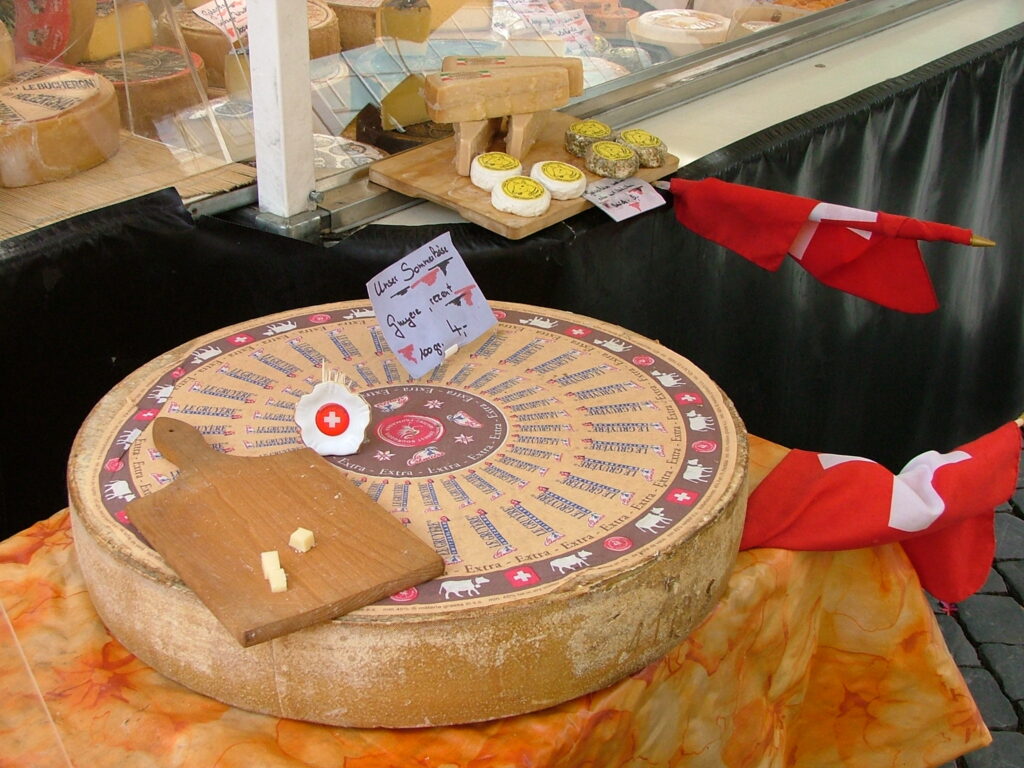
Discover the unique flavors of Swiss cuisine, hidden among the Alps
Switzerland is usually associated with picturesque landscapes, exquisite watches, and banking secrecy, yet its culinary traditions often remain underestimated by the world. A pity — because it offers a true treasure trove of flavors, tucked away in the quiet of Alpine valleys. From juicy meats, through velvety cheeses, to simple yet refined potato dishes — it’s worth discovering the culinary secrets of this small country in the heart of Europe.
Emmentaler, Gruyère, and Raclette – cheeses with a rich history
When we talk about Swiss cuisine, cheese immediately comes to mind. And rightly so — cheese production has a very long tradition, dating back to the Middle Ages. Thanks to their unique taste and versatile use, Swiss cheeses have gained recognition worldwide.
Let’s start with the famous Emmentaler, originating from the Emmental region in the canton of Bern. It’s characterized by large holes and a slightly nutty flavor. This delicate cheese is perfect on sandwiches, pizza, in salads, or casseroles. The history of this cheese goes back to the 13th century and it remains an important part of the region’s cultural heritage.
Another well-known cheese — Gruyère — comes from the canton of Fribourg, precisely from the picturesque town of Gruyères. It’s a hard, intense, slightly salty cheese that melts beautifully. In the kitchen, it’s a staple ingredient of the classic Swiss fondue, but it also has wide use in casseroles, soups, or pasta dishes. Gruyère is aged for up to two years, and its roots date back to the 12th century.
We can’t forget about Raclette either. Produced mainly in the canton of Valais, Raclette owes its popularity to the dish of the same name. Melted over fire or on a special grill, it’s traditionally served with potatoes, vegetables, and various sides. This dish is perfect for feasts among friends.
Classic Swiss meat specialties – Zürcher Geschnetzeltes and other delights
Although cheeses are the true ambassadors of Swiss cuisine, meat dishes are also an inseparable part of its tradition. And here stands out the iconic dish from Zurich, known as Zürcher Geschnetzeltes.
Zürcher Geschnetzeltes is thinly sliced, delicate veal, sautéed in butter with onions. The secret of this dish is the unique sauce — creamy, enriched with white wine, often also veal stock and mushrooms. Traditionally served with rösti — crispy potato pancakes — although it also goes well with rice, mashed potatoes, or pasta.
A more meaty variant of fondue — Fondue Bourguignonne — although of French origin, has firmly taken root in contemporary Swiss culinary culture. Pieces of meat are fried at the table by guests in hot oil and then eaten with a variety of sauces. Despite its French roots, this communal way of eating perfectly suits the family-style meals typical of Swiss homes.
Regional diversity is also evident in the style and ingredients of meat dishes. In the French-speaking regions, sausages (saucissons Vaudois) dominate, while in Italian-speaking Ticino — grilled delicacies and aromatic ground meat dishes are more common. And it’s these local touches that make Swiss cuisine particularly interesting.
Rösti and Alpine innovations – potatoes at their best
In Switzerland even the simplest potatoes rise to the level of culinary art. The best example is rösti, once a farmer’s breakfast in the canton of Bern, today a national delicacy. These are parboiled, cooled, and grated potatoes, fried into a crispy, golden cake. You can find various local variants — with cheese, bacon, onions, or aromatic herbs. Though rösti seems like a simple dish, it hides a wealth of culinary possibilities and regional variations.
But Swiss cuisine doesn’t stop at tradition — it skillfully combines it with new culinary ideas. A great example is Capuns Gratin from the Graubünden region: meat and herbs wrapped in chard leaves and baked to crispness. Or fondue Moitié-Moitié — a simple yet sophisticated combination of Gruyère and Vacherin cheeses.
Contemporary Swiss chefs increasingly return to local Alpine products — game, high-altitude cheeses, aromatic herbs, and pickles. At the same time, they reach for modern culinary techniques and international inspirations. This approach is perfectly embodied by renowned chefs like Andreas Caminada, who enrich Alpine culinary practices with new ideas, creating dishes awarded by the Michelin guide.
Swiss cuisine on a plate – history and flavor in perfect harmony
Swiss cuisine is proof that true beauty of taste lies in simplicity, the quality of local ingredients, and culinary identity. Each region — from German-speaking Bern to Italian-speaking Ticino — tells its own flavorful story. So if you visit Switzerland, don’t let the silent beauty of the Alps distract you from the equally impressive diversity of culinary experiences.
So remember the equation of Alpine flavors: excellent cheeses, juicy meat, and masterful simplicity of potato specialties. A combination that perfectly captures the essence of Switzerland’s culinary secrets.