Dive into the flow, emotions, and watershed moments of UEFA Women’s Euro 2025
UEFA Women’s Euro 2025 is a tournament that will live long in the memories of football fans. Emotion, goals, upsets, and personal triumphs brought the women’s game to a much wider audience than ever before. What happened at this remarkable event, and why do we say it was a breakthrough for players and supporters alike? Let’s walk through the key stages and recap this exceptional summer.
Preparations for the Tournament
Host selection and infrastructure
Switzerland was chosen to host Women’s Euro 2025. The decision was announced in April 2023 after a vote by the UEFA Executive Committee. The tournament was staged in eight cities—Basel, Bern, Geneva, Zurich, Lucerne, St. Gallen, Sion, and Thun—showcasing Switzerland’s strong sporting infrastructure and its commitment to developing the women’s game.
Stadiums underwent extensive upgrades—Zurich and Basel hosted particularly attractive matches and fan zones. Each city was served by an extensive network of rail and electric buses, and the event was promoted as the most environmentally friendly Women’s Euro in history. Fans enjoyed dedicated entertainment areas and fan zones, and the entire logistics model focused on comfort, accessibility, and minimizing the carbon footprint.
Teams and Their Squads
Sixteen national teams from across Europe took part in the Swiss Euro. In addition to the hosts, Switzerland, the tournament featured: England, Germany, France, Spain, Italy, the Netherlands, Sweden, Norway, Denmark, Austria, Belgium, Iceland, Portugal, Scotland, Wales, and Poland. For Poland and Wales it was a debut at the Women’s European Championship finals—a source of pride that attracted many new fans to the game.
Key Players
- Vivianne Miedema (Netherlands)
- Aitana Bonmatí (Spain)
- Lauren Hemp (England)
- Marie‑Antoinette Katoto (France)
- Magdalena Eriksson (Sweden)
There was no shortage of new‑generation stars either—for example, 16‑year‑old Clara Meier of Germany became famous thanks to a beautiful goal in the group stage.
Key Matches and Defining Moments
The tournament kicked off with a spectacular opener between Switzerland and Portugal in Zurich. Joyful atmospheres and a record opening‑match attendance of 38,000 added to the occasion. There were shocks, too—Norway’s early group‑stage exit—and Poland earned their first ever Euro point with a draw against Austria.
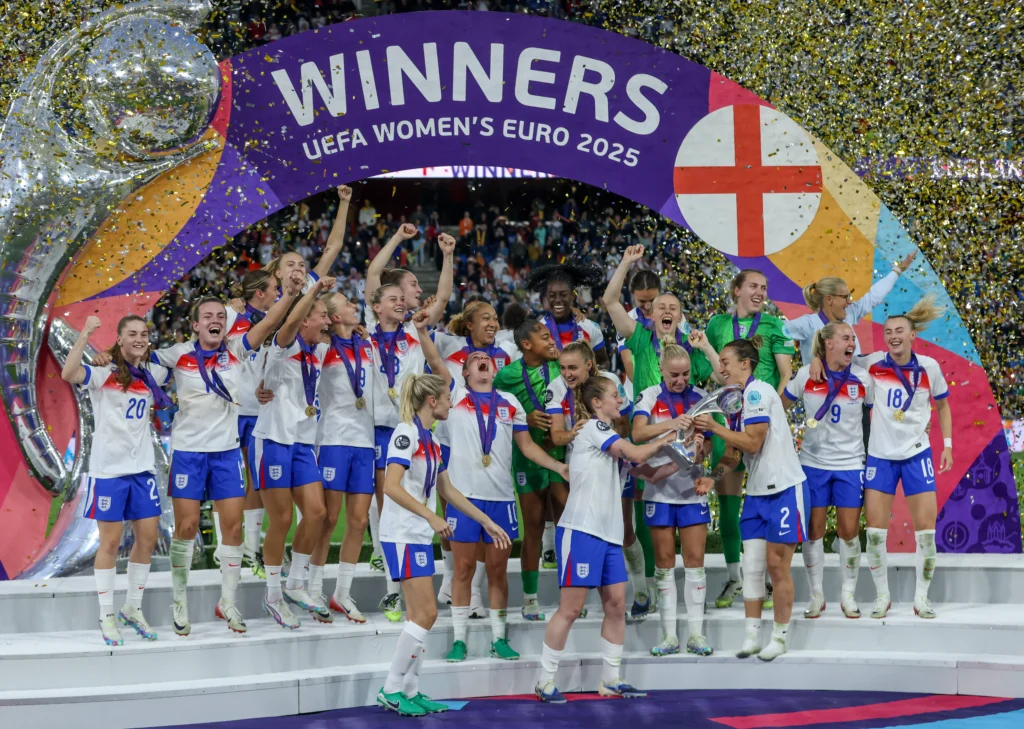
The France–Germany quarter‑final went to extra time and a penalty shoot‑out, where German goalkeeper Almuth Schult shone. The final was a showpiece that set the crowd alight—England beat Spain 2–1, securing a second straight European crown, with Chloe Kelly netting the winner in the 88th minute!
Stars of the Tournament and Breakthrough Performers
Special mentions go to:
- Aitana Bonmatí – named Player of the Tournament, Spain’s midfield leader.
- Lauren Hemp – the assist queen and the most‑fouled player at the Euros.
- Marie‑Antoinette Katoto – top scorer of the group stage.
- Almuth Schult – heroic in the shoot‑out against France.
- Clara Meier – the tournament revelation, the youngest goalscorer.
The performances of these players and their teams drew hundreds of millions of viewers to their screens—on average, TV audiences rose by 30% compared with the previous edition!
Euro 2025’s Impact on the Women’s Game
Euro 2025 went down in history as the most media‑savvy and groundbreaking women’s tournament yet. Organisers highlighted record attendances—over 500,000 spectators in the stands—and record online audiences.
In Switzerland, registrations of girls at football academies rose by over 60% after the tournament. Clubs and sponsors began increasing budgets for women’s teams, and traditional and social media covered the competition as intensively as the men’s Euros.
The debate on pay equity and professionalisation in the women’s game gained fresh momentum—Switzerland and several other federations announced plans to equalise appearance fees for national‑team players. UEFA has already stated that the next edition will be even more innovative and accessible for fans.
Summary
UEFA Women’s Euro 2025 delivered not only great sporting drama and new football stars, but also reshaped the environment in which the women’s game is growing. From spectacular matches to a surge in public interest, this tournament showed that women’s football has become a fully fledged part of the global stage. And that is the best possible news these European Championships could have brought.