
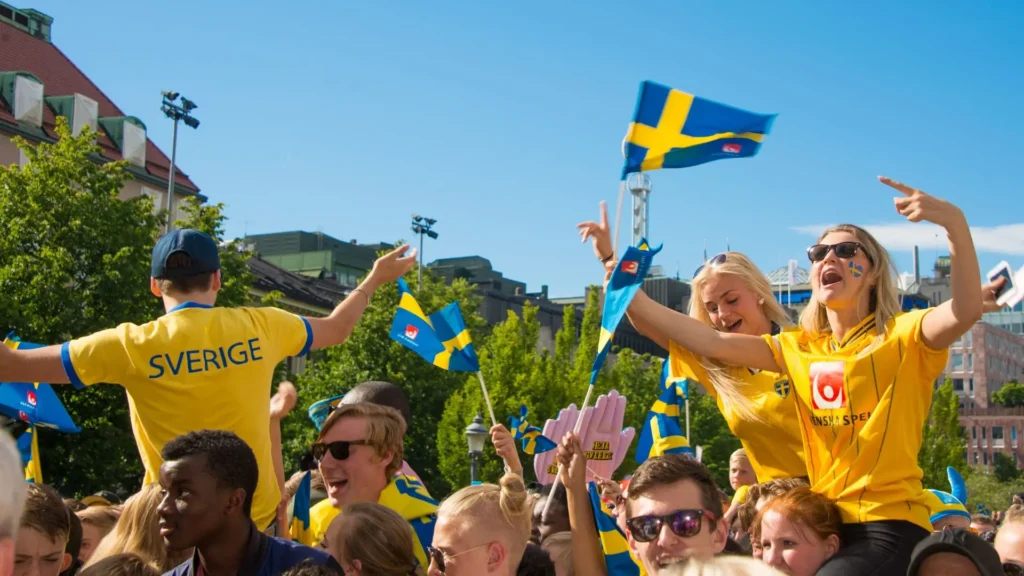
The Sweden women’s national team is entering a decisive stage in the battle for qualification to the 2027 FIFA Women’s World Cup in Brazil. Although Blågult have long been part of Europe’s elite, the current qualifiers show that the road to the tournament will not be as straightforward this time. Squad issues and injuries to key players are forcing the coaching staff to look for new solutions, but the ambitions remain unchanged.
After two matches, Sweden sits in second place in the qualifying group, level on points with Denmark. The standings are currently decided by goal difference, which favors their rivals. The Swedes began their campaign with a narrow win over Italy, followed by a goalless draw with Serbia. These are solid results, but far from the dominance fans have grown accustomed to.
The coming days could prove crucial. On April 14 in Gothenburg, Sweden will face Denmark in a match that could decide the top spot in the group. A few days later, in Stockholm, they will take on Serbia. These fixtures may effectively shape the course of the qualification campaign and answer the question of whether Blågult are ready for direct qualification.
The biggest challenge for coach Tony Gustavsson remains the squad situation. Long time team leader Kosovare Asllani suffered a serious knee injury in March, damaging ligaments that could keep her out for many months. Given her age, there are even questions about the future of her career. It is a huge loss, both on the pitch and mentally for the team.
The problems do not end there. Nathalie Björn is also unavailable, one of the key figures in defense and the former vice captain. In this situation, the captain’s armband has been handed to Stina Blackstenius. The Arsenal Women striker is among the most experienced players in the squad and is in good club form, making her a natural choice for the role.
There is also uncertainty over the availability of Johanna Rytting Kaneryd, who is dealing with a calf injury. On the positive side, Zećira Mušović returns to the squad after maternity leave and could strengthen competition in goal.
Despite the absences, Sweden still has a squad built around players competing in Europe’s top leagues. The core of the team consists of footballers playing in England and in the domestic Damallsvenskan, one of the strongest women’s leagues on the continent. This combination of experience and youth has long been a hallmark of the national team.
The team’s playing style remains unchanged. Sweden relies on tactical discipline, a well organized defense, and collective responsibility. Even with squad limitations, they are capable of maintaining a high level of performance, something they have repeatedly demonstrated at major tournaments, including the 2023 World Cup, where they won bronze medals.
The upcoming matches will be a test not only of sporting quality but also of mentality. The Swedes must prove they can function without their leaders and still compete for the highest goals. Direct qualification for the World Cup remains within reach, but the margin for error is small.
If they fail to win the group, the playoff route will remain, a scenario that no one in Sweden considers ideal. That is why the April fixtures may carry significance beyond just points in the table.
For Swedish women’s football, this is a transitional moment, but also an opportunity. New leaders, greater rotation, and the need to respond quickly to problems could strengthen the team in the long term. The question is whether the effects of this rebuild will already be visible now, when a place at the world’s biggest tournament is at stake.