 2. Bundesliga Women (Germany)
 Three clubs enter the 2. Frauen-Bundesliga this weekend. Hertha BSC have never played at this level. Köln II effectively settled their play-off in 90 minutes. Hoffenheim II did not need one.
Hertha BSC, TSG Hoffenheim II and 1. FC Köln II are not a single category of “newcomer”. They are three different ideas about how a women’s team can grow.
Hertha BSC: a new level and a real crowd
Hertha earned their first promotion as Regionalliga Nordost champions, then took control of the play-off with a 4–1 win at Saarbrücken. The return leg became unnecessarily nervous — Saarbrücken won 3–2 in Berlin — but the hard work had already been done.
The second leg also supplied the image that should excite the league: 4,203 spectators inside the sold-out Stadion auf dem Wurfplatz. Hertha are not entering quietly. They have the capacity to make second-tier women’s football feel like an event in Berlin, a city already represented by an ambitious Viktoria side.
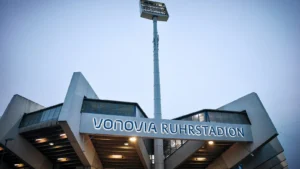
Goalscorer Elfie Wellhausen struck after ten seconds in that promotion-clinching home leg. At the next level, Hertha will need the same nerve after the adrenaline fades. Their reward is the season’s showcase opener: VfL Bochum at the Ruhrstadion on 2 August.
1. FC Köln II: development with competitive consequences
Köln II came through the western play-off in emphatic fashion. A 4–0 first-leg victory over Holstein Kiel did the damage; a goalless return completed the job. Reserve teams are sometimes discussed as if results are incidental. Promotion makes that argument difficult to sustain.
Köln’s young players now enter a division containing two other reserve sides, Eintracht Frankfurt II and Hoffenheim II. Their season will be judged differently from Essen’s or Sand’s. The first team’s needs can change personnel without warning, and development remains central. Yet the competitive environment is precisely the point. Young players learn faster when the opponent is fighting for promotion or survival.
Köln II are not eligible for the DFB-Pokal and begin their league programme against Borussia Mönchengladbach. A derby is an efficient way to discover whether promotion momentum survives the summer.
Hoffenheim II: the pathway returns
Hoffenheim II qualified directly as Regionalliga Süd champions. Their presence restores another established academy to the second tier and reinforces the division’s dual identity: it is both a promotion competition and one of Germany’s most demanding development environments.
They begin away at Viktoria Berlin, one of last season’s top-five sides. It is a difficult assignment and an instructive one. Hoffenheim’s young players will face an opponent with senior ambition, a clear project and little interest in allowing the newcomers time to settle.
Who is best equipped to stay?
Hertha possess momentum, a senior-team identity and the emotional lift of a first promotion. Köln II showed the strongest play-off control. Hoffenheim II have the most familiar development structure. All three have a plausible route to safety.
They also enter a compressed 14-team league in which three clubs were separated by three points around the lower middle last season. Relegated Bundesliga teams strengthen the top, while established sides such as Bochum, Gladbach, Potsdam and Ingolstadt have no desire to be dragged downward.
Hertha look the best placed to make noise immediately, largely because their support already feels too big for the Regionalliga. Köln and Hoffenheim will fluctuate as reserve teams always do. All three, however, are strong enough to make survival more than a defensive ambition.
See every match and table update on the WomenLiveScore 2. Frauen-Bundesliga page.
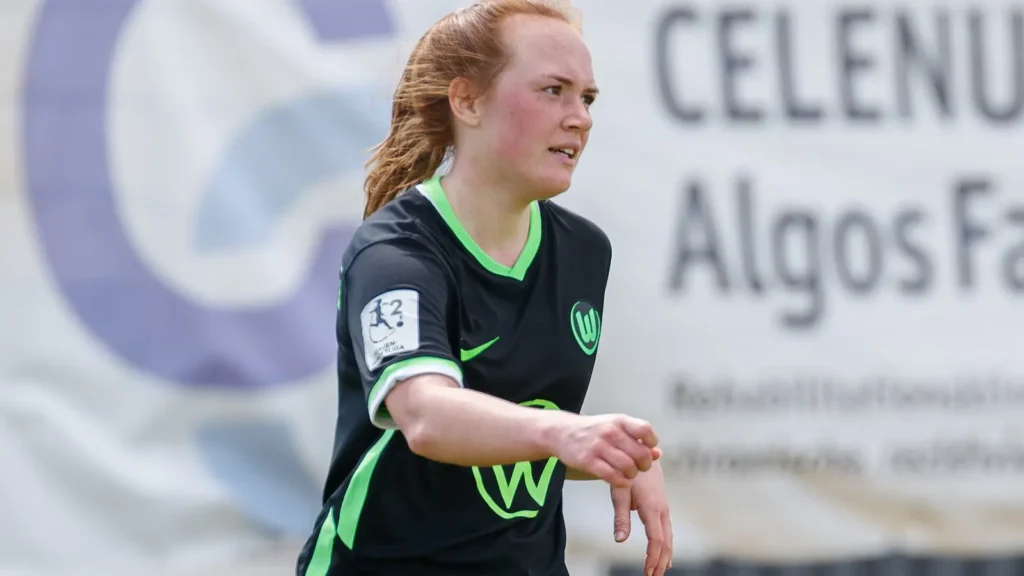
Featured image: Lisanne Gräwe playing for VfL Wolfsburg II against Carl Zeiss Jena in the 2. Frauen-Bundesliga, 2021. Photo by Steffen Prößdorf, licensed under CC BY-SA 4.0, via Wikimedia Commons.