
The controversial women’s football final at the 2025 SEA Games shook Southeast Asia
The women’s football final at the Southeast Asian Games (SEA Games 2025), played on 17 December in Thailand, went down in history not only because of the Philippines’ first-ever gold medal, but above all due to one of the most controversial refereeing decisions in recent years. In the opinion of many fans and experts across the region, it was the referee who deprived Vietnam of its chance to win gold.
After 120 minutes of a goalless draw, the Philippines prevailed 6–5 in the penalty shootout. However, the decisive moment of the match occurred much earlier, in the first half. A goal scored by Nguyen Thi Bich Thuy for Vietnam was disallowed for offside, despite available television replays indicating that the player was in a legal position. The decision immediately sparked outrage and became the focal point of a broader debate about the credibility of refereeing in regional tournaments.
Outrage across the entire region
The reaction from fans was immediate and exceptionally intense. Social media in Vietnam, Thailand, Indonesia, and Malaysia was flooded with comments accusing the referees of a serious mistake and even of bias. Many observers openly expressed the belief that Vietnam had been denied a legitimate goal that could have decided the final before extra time.
Importantly, criticism was not limited to Vietnamese supporters alone. Neutral experts and sports journalists from across the region also emphasized that decisions of this nature, especially in a match of such high stakes, undermine trust in both officials and tournament organizers.
Historic success of the Philippines overshadowed by scandal
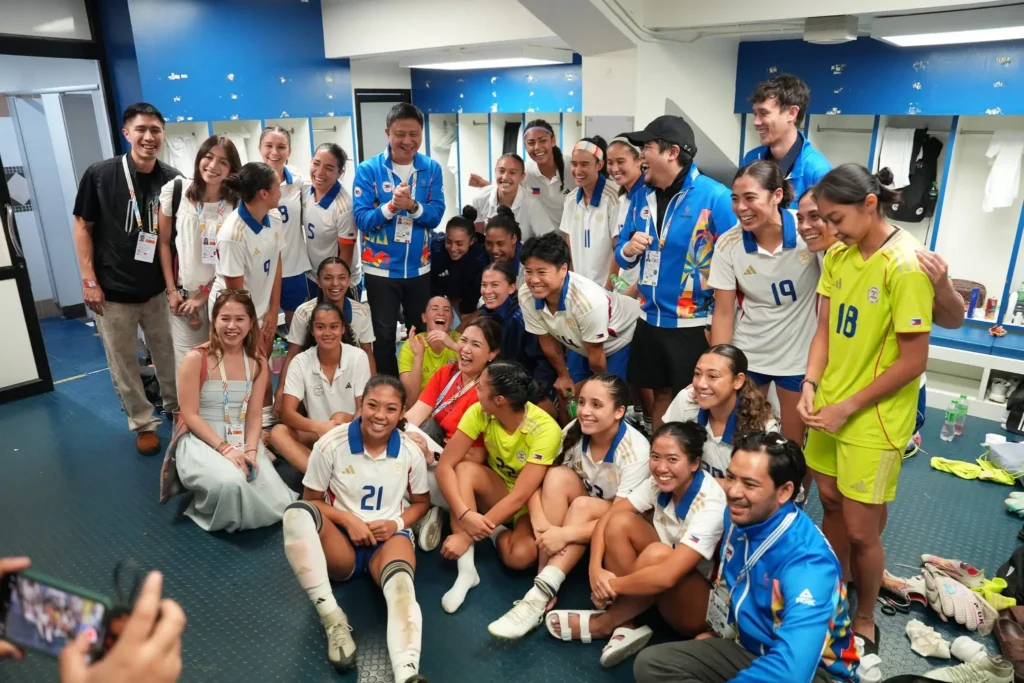
Nevertheless, it cannot be overlooked that the Philippine national team achieved an unprecedented success by winning its first-ever SEA Games gold medal in women’s football. The team demonstrated tactical maturity, a well-organized defense, and strong mental resilience during the decisive penalty shootout.
At the same time, even some Filipino commentators acknowledge that this triumph will forever be overshadowed by controversy. After the match, Philippine players stressed their respect for their opponents and their understanding of the emotions surrounding the disputed decision, while the official result of the match remains unchanged.
A systemic problem, not an isolated case
The 2025 SEA Games final once again exposed structural problems in women’s football in Southeast Asia. The absence of VAR, uneven standards of referee training, and the enormous pressure associated with major finals mean that officiating errors can have dramatic sporting and reputational consequences.
Calls are growing louder for the introduction of technological support for referees and for stronger oversight by continental federations. Fans and experts are also demanding a clear and transparent statement from the SEA Games organizers and the Asian Football Confederation regarding the controversial decision.
A final that will change the debate
Two days after the match, the issue continues to dominate regional media and football forums. For some, it symbolizes a historic breakthrough and the Philippines’ success; for others, it is proof that Vietnam fell victim to the “scandal of the year.” Regardless of perspective, the 2025 SEA Games final has become a turning point in the discussion about refereeing standards and the future of women’s football in Southeast Asia.