
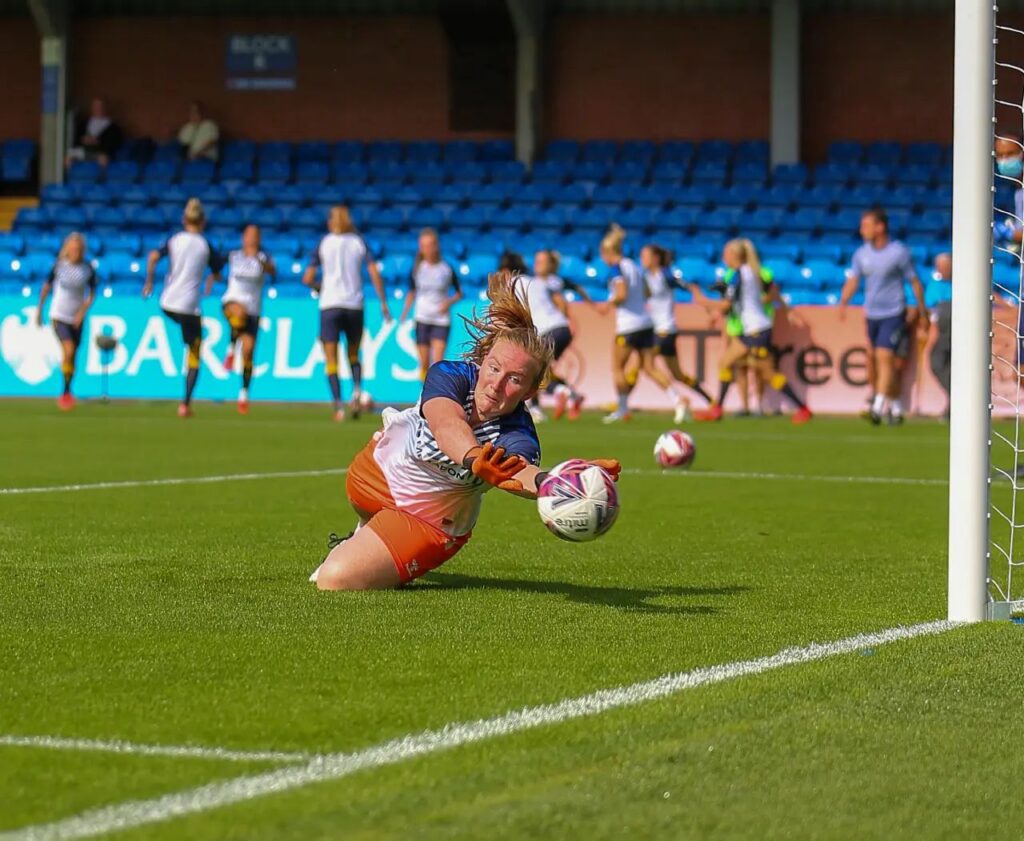
Women’s football has become a global phenomenon. Just three decades ago it was marginalised, often treated as a recreational activity or a curiosity, yet today it attracts millions of spectators, investors, and sponsors. Stadiums fill to record capacities, television broadcasts draw massive audiences, and female footballers have become international stars. At the core of this transformation lies something far more fundamental than marketing: the training system and football academies that enable young girls to develop from their earliest years.
The history of women’s football is a story of persistence and the struggle for equal opportunities. The first women’s teams emerged as early as the beginning of the 20th century in England, France, and Italy, but they quickly met social resistance. The most symbolic moment came in 1921, when the English Football Association (FA) officially banned women from playing on stadiums owned by member clubs. The reasoning was that football was “unsuitable for females.” That ban remained in force until 1971. In many other countries the situation was similar, and women could play only at an amateur level, without structures or institutional support.
It was not until the 1980s and 1990s that a real breakthrough occurred. In 1981 FIFA began to show official interest in women’s football, and in 1991 the first FIFA Women’s World Cup took place in China. At the same time, UEFA introduced its own tournaments such as the Women’s European Championship, and later, in 2001, the Women’s Champions League. It was during this period that the need for a coherent training system for girls began to take shape, one that would support development from grassroots to elite level.
The United States was the pioneer in this field. While European girls were still fighting for access to the pitch, in the U.S. football (soccer) had already become the most popular sport among school-aged girls. This was due to the country’s educational model, in which sport is an integral part of the school system. From an early age, girls participate in programmes such as AYSO (American Youth Soccer Organization), which introduce them to football in an inclusive and encouraging environment. The most talented then move on to high-school and collegiate teams, where they receive scholarships, professional coaching, and full athletic support. For many, this pathway leads directly to the National Women’s Soccer League (NWSL). This system produced the U.S. Women’s National Team that has dominated international football for decades.
European federations initially viewed the American success from a distance. Women’s football in Europe developed more slowly but in a more institutionalised manner. Germany was one of the first countries to create an integrated training model. As early as the 1990s, the German Football Association (DFB) began building a nationwide network of Talentförderzentren, regional training centres covering the entire country. Each centre offers professional coaching, physiological testing, and sports psychology sessions. This system produced generations of outstanding players such as Birgit Prinz, Nadine Angerer, and Dzsenifer Marozsán. Today, the DFB cooperates with over 350 youth training centres, a number of which are dedicated solely to girls.
France developed a slightly different but equally effective model. The French Football Federation (FFF) focused on integrating women’s academies with men’s clubs. Girls train in the same facilities as boys, using identical equipment, infrastructure, and coaching methods. The most famous example is Olympique Lyonnais, whose women’s academy is considered one of the best in the world. The club invests heavily in development from the youngest age groups, offering both athletic and academic education. Graduates such as Wendie Renard, Delphine Cascarino, and Amel Majri are proof of this system’s success, winning multiple UEFA Women’s Champions League titles and strengthening the French national team.
Spain, on the other hand, built its system around a specific football philosophy. Spanish academies, particularly FC Barcelona Femení, train players in the tradition of technical, possession-based football. From the youngest age groups, coaches emphasise combination play, tactical awareness, and creativity. As a result, Spanish players are distinguished not by physical strength but by their intelligence and control of the game. This generation, led by Alexia Putellas, captured the 2023 FIFA Women’s World Cup, proving that style and philosophy can lead to global dominance.
In Scandinavia, the development of girls’ football has strong social roots. Norway, Sweden, and Denmark have invested in gender equality in sport for decades. Women’s football there is viewed as a natural part of the sporting culture, and girls’ academies receive financial support from local governments and sports associations. The focus is not on trophies but on accessibility and enjoyment. Every girl has the right to play, and professional careers are seen as just one possible outcome. This inclusive model ensures stability and maintains one of the highest participation rates in the world relative to population.
The diversity of these systems shows that there is no single path to success. The American model is built around education, the German around federation structure, the French around club integration, and the Scandinavian around social inclusion. Yet they all share a common goal, to provide girls with the opportunity to develop in a professional and supportive environment.
Technological progress and a deeper understanding of female physiology have also transformed training methods. Increasingly, academies use GPS tracking, load-management systems, and nutritional programmes tailored to women’s needs. Training plans are designed with hormonal cycles, recovery, and injury prevention in mind, since certain types of injuries are more frequent in specific phases of the menstrual cycle. Many countries have also introduced mentoring schemes, allowing young players to learn directly from experienced national-team players.
Despite these advances, obstacles remain. In many places there is still a shortage of qualified female coaches, which hinders the growth of women’s programmes. In developing countries, the lack of infrastructure such as pitches, facilities, or equipment remains a serious barrier. Cultural factors can also be restrictive. In some regions, girls who play football face social disapproval or even family opposition. FIFA and UEFA have launched global campaigns to change this perception, but cultural transformation takes time.
In Poland, women’s football has been developing gradually. The beginnings were modest, yet recent years have brought visible progress. The Polish Football Association (PZPN) has introduced initiatives such as the Akademia Młodych Orlic, aimed at popularising football among school-age girls. Increasingly, Ekstraliga clubs are forming youth teams for girls, while centres such as Medyk Konin and SMS Łódź are emerging as local training hubs. Nevertheless, compared with Western Europe, Poland is still in the process of building its system. The country lacks a broad network of academies and a cohesive nationwide development strategy. Much depends on investment from local authorities and on whether women’s football will receive consistent financial and institutional backing.
Looking across the globe, it becomes clear that success in women’s football training depends not only on athletic standards but also on the coherence of the system and long-term vision. Academies operating within well-defined goals, from grassroots to professional integration, achieve the most sustainable results. In countries where girls’ training is treated equally to boys’, development is noticeably faster. Where women’s football remains a side project, progress is slower and less stable.
The future of women’s football training looks promising. FIFA has announced plans to implement global standards for female player development, similar to the men’s Talent Development Scheme. Every national federation will be expected to establish structured training pathways for girls, from community programmes to elite academies. At the same time, growing investment in the education of female coaches is reshaping the landscape. This is not only about gender equality but also about improving the understanding of the specific physical and psychological needs of female athletes.
Today, girls’ football academies are far more than just places of training. They are laboratories for the future of the sport, spaces where new ideas, technologies, and values are tested. For young players, they are environments where passion turns into purpose, where confidence and teamwork are nurtured. For society, they symbolise a broader change, proof that equality in sport is no longer an aspiration but a reality.
Women’s football is no longer on the margins of the global game. Thanks to the rise of academies, structured training systems, and growing support from federations and sponsors, it has become a professional, respected, and inspiring part of world football. Each girl stepping onto the pitch today stands as a testament to decades of struggle and progress, and as a promise of a future in which the world’s most popular sport truly belongs to everyone.