
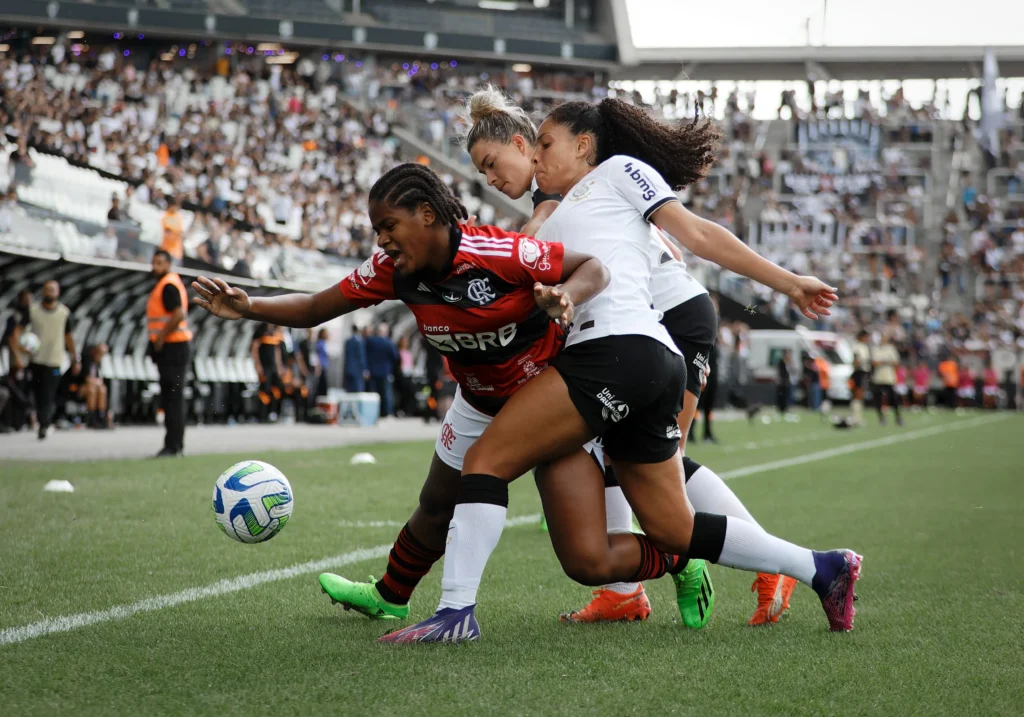
Flamengo’s decision to cut funding for its women’s football team has ignited a wave of criticism across Brazil that shows no sign of slowing down. The Rio de Janeiro club, the richest and most recognizable in all of South America, announced the departure of head coach Rosana Augusto along with a planned “readequaçãо do orçamento”, meaning a reduction of the women’s football budget. For many, it’s a blow to the development of women’s football in a country that only recently celebrated record-breaking viewership during the Women’s World Cup.
A Decision That Stung
The club’s official statement sounded calm. Flamengo intends to focus on developing its youth academy rather than signing big senior contracts in the coming years. In practice, this means no new investments in the professional women’s team and possibly the departure of its biggest star, Cristiane, one of Brazil’s most decorated players.
Unofficial reports suggest that part of the funds previously allocated to women’s football will now be redirected toward volleyball. The club argues that this restructuring will allow better resource management, but within the women’s football community, it’s widely seen as a step backward.
“It’s shameful what Flamengo is doing to women’s football,” wrote Brazilian sports journalist Renata Mendonça on X (formerly Twitter), a longtime advocate for gender equality in sport. “The richest club on the continent, with the largest fan base in Brazil, just can’t stop hating women’s football,” she added in an emotional post that quickly went viral.
A Symbolic Blow for Brazilian Women’s Football
Flamengo is no ordinary club. It’s a financial powerhouse, a symbol of Rio, a brand with millions of loyal supporters. For many, institutions like this should be leading the charge toward equality, especially in a country where women were once banned from playing football until 1979.
That’s why the decision hit so hard. Critics point to massive investment disparities. Flamengo spends less than 1% of its annual revenue on the women’s team, despite earning hundreds of millions of reais per year. By contrast, clubs like Corinthians and Cruzeiro allocate a visibly higher percentage of their budgets to women’s football, and the results speak for themselves: championships, packed stadiums, and rapidly growing fan engagement.
“This isn’t about money, it’s about priorities,” says Carla Silva, an analyst for the Brazilian outlet Futebol Feminino Agora. “Flamengo has everything it needs to become a leader in South American women’s football, it just doesn’t want to. The club prefers to invest in men’s sports, where profits come faster. Women’s football takes patience, and few are willing to show that.”
Rosana Augusto – A Victim of the System?
Head coach Rosana Augusto, a former Brazil international and legend of the women’s game, took charge of Flamengo with high hopes. Her goal was to build a team capable of competing with the best: Corinthians, Palmeiras, Ferroviária. But just a few months into her tenure, she found herself cornered.
“I can’t build a professional team without financial backing and without the club’s genuine commitment,” she said in a recent interview.
According to Brazilian media, Rosana’s resignation was a direct result of budget cuts and a lack of guarantees for the project’s future. Her departure sent shockwaves through the sports world. Rosana is more than a coach; she’s a symbol of perseverance and equality in Brazilian football.
In the early years of her playing career, women’s football was marginalized and underfunded. Today, just as it’s finally gaining recognition, the exit of such a key figure from a major club feels like a painful step backward.
Public and Media Reactions
Social media quickly erupted. The hashtag #VergonhosoFlamengo (“Shameful Flamengo”) trended nationwide for several days. Many women, athletes, journalists, and activists highlighted how the situation exemplifies the lack of genuine commitment from major clubs to women’s football.
“You can’t talk about progress if the country’s biggest clubs keep turning their backs on women,” wrote football icon Marta Vieira da Silva on Instagram. Her post garnered over half a million likes and thousands of supportive comments.
Even Flamengo fans were divided. Some argued the club should focus on men’s competitions and volleyball, which bring in more revenue. Others expressed disappointment.
“This is a club that always talked about pride and the Rubro-Negro family. And now it’s showing that not everyone in that family is valued equally,” wrote one fan on a Flamengo supporters’ forum.
Women’s Leagues in Brazil – One Step Forward, Two Steps Back
In recent years, women’s football in Brazil has made major strides. Following the national team’s successes and rising sponsorship interest, the Brasileirão Feminino began attracting larger audiences and national media attention. Matches between Corinthians and Palmeiras have drawn 20,000 to 30,000 spectators, and TV broadcasts reached record ratings.
Flamengo, as a global brand, could have strengthened this trend. Instead, its decision sends a worrying message to the entire league. Experts warn that other clubs may follow suit, citing “lack of profitability” as justification for budget cuts.
“It’s a vicious cycle,” explains Juliana Rocha, a sports researcher at the University of São Paulo. “When a club doesn’t invest in quality, the team doesn’t attract fans or sponsors. Then the same club claims women’s football isn’t profitable. This cycle keeps inequality alive.”
Economics vs. Values
From a purely financial standpoint, Flamengo’s move may seem rational: cost-cutting, reallocating funds, focusing on faster returns. But socially and morally, it’s a loss.
In Brazil, women athletes still earn over 90% less than their male counterparts. Only a small percentage of female players have full professional contracts; many juggle training with other jobs. Against this backdrop, Flamengo’s decision carries heavy symbolism. Even the richest club in the country is unwilling to commit to true equality.
“This isn’t just about money, it’s about the message it sends. If Flamengo says the women’s team isn’t a priority, what message does that send to young girls dreaming of becoming footballers?” asked Renata Mendonça in an interview with ESPN Brasil.
The Political and Social Context
The decision also fits into a broader context. Brazil is still debating the role of women in sports. Despite the growing popularity of women’s football, investment remains low. According to data from the Brazilian Football Confederation (CBF), fewer than 15% of licensed coaches are women, and about 70% of clubs lack a permanent women’s section.
Government programs aimed at promoting equality have produced limited results, while corporate sponsors focus overwhelmingly on men’s football. Flamengo’s main sponsors, including Adidas and BRB, contribute only symbolic amounts to the women’s side.
“Unless we change how sports are funded and create real incentives for clubs, women’s football will remain on the margins,” says sports economist Fernanda Lima. “Flamengo had the perfect chance to lead by example and it failed.”
What’s Next for Flamengo Women?
For now, the club has announced plans to focus on the academy, promoting players from its youth ranks. In theory, this could yield long-term benefits, but without solid financial backing it’s unlikely to sustain competitiveness in a league where rivals are investing more aggressively each year.
Brazilian media report that several players are considering leaving, and Cristiane’s agent is already in talks with Corinthians. If she departs, Flamengo won’t just lose its biggest star; it will also lose credibility as a club that ever truly believed in women’s football.
More Than Just a Sports Story
The Flamengo story is more than a sports headline. It’s a reflection of deeper inequalities, a lack of vision, and the ongoing struggle of women to claim their rightful place in the game.
Flamengo still has time to reverse course. Even allocating a small fraction of the men’s team’s profits could ensure the stability and growth of the women’s program. After all, in 2025 women’s football will take center stage in FIFA’s global marketing strategy, and interest across South America is growing at record pace.
The question is: will Flamengo come to its senses, or will it remain a symbol of missed opportunity?
For now, one thing is certain: women in Brazilian football are once again forced to fight for the most basic right of all — to be taken seriously.